

















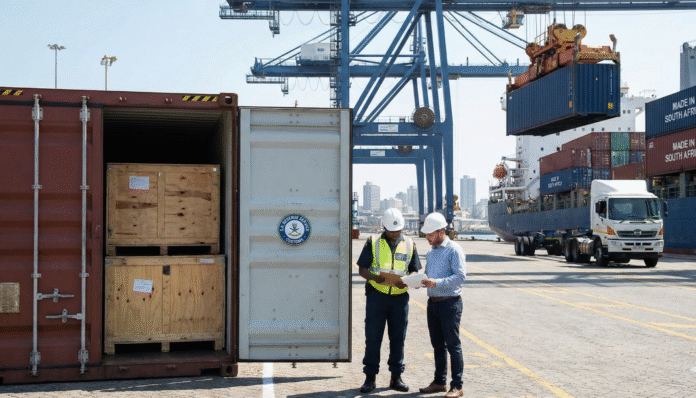
For South African businesses, the global market is calling. Whether you are targeting the European Union, the US through AGOA, or the booming intra-African trade routes, 2026 presents significant opportunities for growth. But for many exporters, the journey ends before it truly begins, stuck in a holding bay at the port.
Customs delays are more than just a nuisance; they are a financial haemorrhage. “Demurrage” and “detention” fees can accumulate daily, wiping out your profit margins. Worse, missing a delivery window can damage your reputation permanently.
The good news? Simple, preventable errors trigger most border stops. Before your next container leaves the warehouse, run through this expanded checklist to ensure your goods sail through customs without a hitch.
1. The “Three-Way Match” Rule for Documentation
Paperwork is the most common cause of friction. Customs officials are trained to look for discrepancies. Even a minor typo regarding the weight or value of your goods can trigger a full inspection.
To pass, you need a perfect Three-Way Match between these documents:
-
Commercial Invoice: This is your primary declaration of value. It must list the buyer, seller, Incoterms, and a detailed description of the goods.
-
Packing List: This must mirror the physical reality of the cargo. If the list says “10 crates” but you shipped “11 crates,” your shipment will be detained.
-
Certificate of Origin: This is crucial for leveraging trade agreements (like SADC or AGOA). Without it, your client may be forced to pay full import duties, making your product uncompetitive.
The Golden Rule: Ensure the description, weight, and value are identical across all three documents.
2. Verify Your HS Codes (Tariff Headings)
Every product that crosses a border is defined by a “Harmonized System” (HS) code. This code determines the duties, taxes, and restrictions applied to your goods.
-
The Risk: Using an incorrect code is dangerous. If you use a code with a lower duty rate, customs may view it as an attempt to defraud the state, leading to heavy fines and blacklisting. If you use a code with a higher rate, you are throwing money away.
-
The Nuance: Some products are ambiguous. Is a “smart watch” classified as a “watch” or a “communications device”? The duty difference can be huge.
-
The Fix: Always validate your HS codes with a licensed clearing agent before shipping.
3. Packaging Compliance: The Overlooked Barrier
Many exporters obsess over the product but ignore the packaging. This is a critical mistake says Mike Cahill from Arminel Industries. International trade has strict biosecurity laws regarding wooden packaging to prevent the spread of pests and diseases.
If your cargo is packed on untreated timber pallets or in raw wooden crates, foreign customs authorities can reject the entire shipment. They may order it to be fumigated (at your cost) or even destroyed.
-
ISPM 15 Compliance: All wooden packaging materials (pallets, crates, dunnage, skids) must be heat-treated and clearly stamped with the ISPM 15 mark. This certifies the wood is pest-free.
-
Physical Integrity: A broken crate draws attention. Customs officers are more likely to flag and inspect a shipment that looks damaged or unstable.
Pro Tip: Don’t let cheap packaging become an expensive bottleneck. Read more about how custom crates protect export cargo and why ISPM 15 compliance is non-negotiable for international trade.
4. Incoterms: Define Where Your Liability Ends
“Incoterms” (International Commercial Terms) are the standard rules that define who is responsible for the shipment at every stage of the journey. A common source of conflict is when the buyer and seller assume different terms.
-
Ex Works (EXW): The buyer picks up the goods from your factory. You have minimal responsibility.
-
DDP (Delivered Duty Paid): You are responsible for everything—shipping, insurance, and even the import duties in the buyer’s country.
-
CIF (Cost, Insurance, and Freight): You pay for transport to the destination port, but risk transfers to the buyer once goods are on the ship.
Why it matters for Customs: If you are shipping DDP, you are the importer of record in the foreign country. If you don’t have a tax ID there, the goods will be stuck. Clarify this in your contract immediately.
5. Secure Essential Permits Before You Load
Certain goods require specific permits beyond standard customs clearance. In South Africa, these are often managed by different government bodies, and processing times can be slow.
-
Agricultural Goods: You will likely need a Phytosanitary Certificate from the Department of Agriculture, Land Reform and Rural Development (DALRRD).
-
Scrap Metal & Second-Hand Goods: These often require ITAC (International Trade Administration Commission) export permits.
-
Dual-Use Goods: Items that have both civilian and military applications (like certain electronics or chemicals) require strict vetting.
The Strategy: Apply for these permits weeks, if not months, in advance. Never load a container assuming the permit will “arrive in a few days.”
Summary
Successful exporting requires a shift in mindset. You aren’t just selling a product; you are managing a complex logistical chain. By ensuring your paperwork is precise, your HS codes are accurate, and your packaging is compliant, you protect your bottom line and build a reputation as a reliable international partner.